
Halifax County Court Records After Arrest
In Halifax County, a court record after a jail arrest starts after the custody event. The person may be booked at Halifax County Adult Detention Center, the BRRJA regional jail at 1010 Blue Ridge Lane, but the case record belongs to the courts. The arresting agency may be the Halifax County Sheriff's Office, South Boston Police Department, Town of Halifax Police, Virginia State Police, or another agency with a Halifax case. Sheriff Fred S. Clark appears on the Halifax County Sheriff's Office page, and the sheriff's office is part of the local public-safety path. The court file, though, is controlled by the clerk and the court level that has jurisdiction.
The difference matters. The Halifax County jail inmate records page is the custody side, with booking, bond, housing, holds, and release status. The Halifax County jail mugshots page is the booking-photo side when a photo is public and available. Court records after a jail arrest show the charge as prosecuted, the next hearing, whether a charge was amended or dismissed, and whether the case ended in a conviction. A booking charge can be short-hand arrest language. A court charge is the filed case that should be used for legal status and disposition.
The prosecutor is the Halifax County Commonwealth's Attorney. Virginia does not use the District Attorney title for county prosecution. Tracy Q. Martin is listed as Commonwealth's Attorney, and that office prosecutes criminal cases after arrest and booking. The office may proceed on the original charge, amend counts, reduce charges, decline to proceed, or seek indictment in Circuit Court. A jail roster can lag behind those changes, so the court record is the better source for charge status.
Find Halifax County Court Records
Virginia offers several court search channels for Halifax County criminal cases. The broad starting point is the Virginia court case information page, which routes users to statewide search, General District Court, Circuit Court, and Juvenile and Domestic Relations District Court systems where public access is available. The statewide Online Case Information System can help when the court level is unclear. The General District Court search is often the first practical stop after a recent jail arrest because many misdemeanors, traffic-criminal matters, arraignments, and felony preliminary hearings begin there.
The Halifax General District Court page gives local court context. It lists Veresia Wood as clerk, shows the court at 8 South Main Street, Suite 200, Halifax, and identifies arraignments at 11:00 a.m. Its schedule also separates agency dockets, including Halifax County Sheriff's Department, Virginia State Police, Town of Halifax, and Town of South Boston matters. That schedule is useful when a person knows the arresting agency but not the case number.
The Virginia case-status screenshot in the image set comes from the official courts page. The source is the Virginia court case information page.
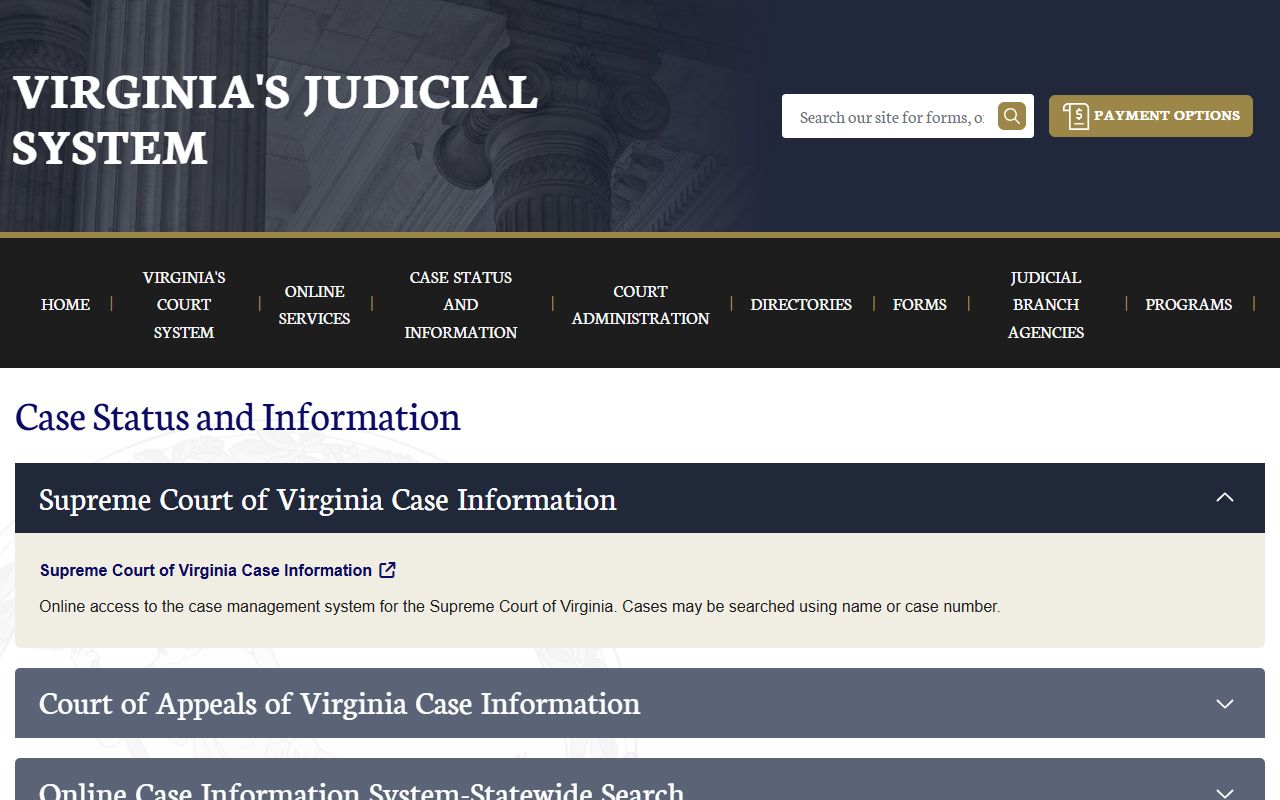
Use the court system to confirm filed charges and disposition, not to confirm whether someone is still housed at HCADC.
| Channel | Search Fields | Use It For |
|---|---|---|
| Online Case Information System | Name, court/locality, case details when available | Broad adult criminal case search across Virginia systems. |
| General District Court Case Information | Locality, defendant name, case number, hearing date | Halifax misdemeanors, traffic-criminal cases, arraignments, and felony preliminary hearings. |
| Circuit Court Case Information | Locality, name, case number, hearing date where available | Felony cases after indictment or transfer to Circuit Court. |
| Clerk's office | In person, phone, or mail request | Older files, certified copies, case-number help, and records not clear online. |
Search Court Records After Jail Arrest
A Halifax County court-record search works best when it starts with the custody facts and then moves to the court case. If the person is still in the BRRJA regional jail, the JailTracker profile may show the booking date, arresting agency, warrant number, charge wording, bond type, bond amount, holds, and case fields when configured. Those details help separate the right defendant from people with similar names. They do not replace the court file.
- Get the exact legal name from the HCADC roster, a court paper, or a bond document. Common names can create false matches.
- Search the Virginia statewide case portal. If the system asks for locality, choose Halifax and start with criminal or traffic-criminal records.
- Search General District Court for a recent misdemeanor, traffic-criminal charge, arraignment, or felony preliminary hearing.
- Search Circuit Court if the charge is a felony after preliminary hearing, indictment, or grand jury action.
- Compare each court charge with the jail charge. Treat the court disposition as the case outcome.
If the online systems do not show a new arrest right away, that does not prove no charge exists. The case may not be entered yet, the name may be misspelled, the charge may be under a different court level, or the matter may need clerk help. The county General District Court page and the county Circuit Court page provide local clerk channels for Halifax cases.
Note: Court data can trail a weekend or holiday arrest, while jail custody status may change as bond or holds are reviewed.
Halifax County Charging Documents
Charges after a jail arrest can reach court in more than one form. In Virginia, an early arrest may be tied to a warrant or complaint issued through the magistrate or court process. Misdemeanors often remain in General District Court unless appealed. Felony cases can begin in General District Court for bond, arraignment, and preliminary hearing, then move forward if probable cause supports the felony charge or if the Commonwealth's Attorney proceeds by indictment in Circuit Court.
| Document Type | Plain Meaning | Where It Usually Fits |
|---|---|---|
| Warrant or complaint | Early charging paper tied to an arrest, summons, or magistrate process. | Often appears near booking and first court dates. |
| Information or amended charge | Prosecutor-filed or prosecutor-adjusted charge language. | Used when the Commonwealth's Attorney changes how the case proceeds. |
| Indictment | Formal felony charge returned by a grand jury. | Controls many felony cases once the matter is in Circuit Court. |
Those labels should not be read as proof of guilt. They mark the way a case entered or moved through court. A charge can be pending, amended, reduced, dismissed, nolle prossed, or resolved by plea, trial, or other court order. Court records after a jail arrest should be checked by case number when possible because one arrest can produce more than one charge and more than one hearing date.
Halifax County Charge Status
Charge status is the part of the court record that tells whether a case is still open and what happened to each count. The status may differ from the jail roster because the roster is built for custody. A BRRJA booking entry may show the charge that caused booking, but the prosecutor may later file a different charge, merge counts, reduce a felony to a misdemeanor, or decline to move forward on a count. A person may also remain jailed on a hold even after one charge changes.
| Status | What It Means | Why It Matters After Arrest |
|---|---|---|
| Pending | The charge is open and still moving through court. | Check the next hearing, bond status, and whether the court is GDC or Circuit Court. |
| Amended or reduced | The filed charge changed from the original language. | The court charge may no longer match the jail booking charge. |
| Dismissed | The court ended that charge without a conviction on that count. | Other charges or holds may still exist. |
| Nolle prosequi | The prosecutor declined to proceed on that charge. | It is not the same thing as a finding of innocence. |
| Convicted | The person was found guilty or entered a guilty plea. | The disposition, sentence, and appeal rights depend on the court record. |
Bond After Halifax County Arrest
Bond is custody information, but it affects the court path after arrest. A magistrate or judge may set release terms, and the jail roster client supports bond type and bond amount fields. Bond shown online should be confirmed with HCADC at 434-476-5500 before payment because a later court order, new warrant, probation hold, parole hold, federal hold, or immigration detainer can stop release even if local bond appears payable.
| Release or Hold Type | Meaning in Plain Terms |
|---|---|
| Personal recognizance | Release on written promise and conditions, with no full cash payment up front. |
| Cash bond | Money must be posted before release, subject to current court and jail rules. |
| Surety bond | A licensed bail bondsman or surety posts security for the person. |
| No bond | The person is not currently eligible for release on that matter. |
| Hold or detainer | Another agency or court has a separate reason to keep the person in custody. |
No official HCADC source reviewed published a Halifax-specific bond-payment fee table or payment hours. For that reason, bond should be verified through the jail, magistrate, clerk, or counsel before anyone pays money. Court records help explain the charge and bond order. Jail records help explain the current custody result.
Warrants and Court Records
No official Halifax County active-warrant database was located in the research. A warrant may appear only after it becomes part of a court case or after it results in arrest and booking at HCADC. The sheriff page gives general law-enforcement contact and states that dispatchers are available 24/7, but it does not publish a searchable warrant list. People who believe they have an active warrant should use counsel, the issuing court, or the responsible law-enforcement agency rather than testing the issue through a casual encounter.
Common warrant-related records include arrest warrants, bench warrants or capias orders for missed court, search warrants, fugitive holds, and probation or parole violation warrants. JailTracker client fields support warrant number, control number, case number, arrest number, charge description, bond amount, bond type, and arresting agency. Court records after a jail arrest can show the linked case, hearing date, or capias history, but they may not show every law-enforcement record held by the sheriff or another agency.
Charges vs Convictions
A charge is an accusation in a court file. A conviction is a court outcome. That distinction is essential when reading Halifax County court records after arrest because an arrest and a charge do not prove guilt. A case may be dismissed, amended, reduced, continued, nolle prossed, or resolved by plea or trial. The final disposition should be read from the court record, not from a booking page or a third-party background-check snippet.
| Point | Charge | Conviction |
|---|---|---|
| Stage | Filed accusation after arrest, warrant, summons, or indictment. | Final guilty finding or guilty plea entered by the court. |
| Proof | Based on probable cause or charging decision. | Requires proof beyond a reasonable doubt or a valid plea. |
| Record source | Case information, warrant language, complaint, or indictment. | Court disposition and sentencing entry. |
| Custody impact | May affect bond and jail status. | May lead to jail sentence, state DOC custody, probation, fines, or other orders. |
Sealed and Expunged Records
Virginia public access law gives the public access to many adult criminal and law-enforcement records, but it also has limits. The Virginia Freedom of Information Act starts at Virginia Code section 2.2-3700, and the request process is governed by section 2.2-3704. Law-enforcement records and adult arrestee information are addressed in section 2.2-3706. Sealing and expungement for qualifying criminal history and court records are addressed in section 19.2-392.2.
| Record Treatment | What It Does | Halifax County Search Effect |
|---|---|---|
| Sealed | Restricts public access to a qualifying court or criminal-history record. | The case may not appear in the same public search channels. |
| Expunged | Removes or shields qualifying records through a statutory court process. | Public search results may be withheld after the order is processed. |
| Dismissed but not sealed | The charge ended, but no sealing order has been applied. | The public case may still show a non-conviction disposition. |
Sealing and expungement are not automatic fixes for every arrest record. Eligibility depends on the charge, outcome, timing, and the court order. A dismissed Halifax County charge may still need a separate petition or statutory process before a public court search changes. Certified court records should be requested from the clerk if a person needs proof of the official disposition.
Restricted Court Records After Arrest
Some records are not displayed in the same public channels. Juvenile matters, sealed cases, expunged records, certain investigative records, and court files under special restriction may be withheld or limited. Virginia law-enforcement records rules also allow limits where release would jeopardize a felony investigation until the risk ends. A blank search result does not always mean no arrest, no charge, or no record. It can mean the record is in a different court, is not yet entered, is restricted, or must be requested from the originating office.
Important: Court and jail information should not be used for employment, housing, credit, insurance, or any FCRA-covered screening purpose.